
Cybersecurity has gone mainstream, but most cyber marketing is still stuck in niche mode.
As cyber competition accelerates, trade shows and white papers are no longer enough to stand out. For CMOs, the challenge isn’t visibility, it’s belief: how to build trust, credibility and preference in a category where everyone claims to be "best in class".
High-profile data breaches at major UK brands, from Jaguar Land Rover to Marks & Spencer, have pushed cybersecurity out of the IT department and into the public consciousness. As well as exposing technical vulnerabilities, these incidents also carry reputational risk. You won’t be judged on whether you get breached, but on whether people still trust you afterwards.
And It’s not just reputation. The September 2025 cyber-attack on Jaguar Land Rover cost the company approximately £196 million in direct cyber-related costs, with total losses and broader economic impact on the UK estimated at up to £1.9 billion. This means cybersecurity is now firmly referenced in board meetings, and finding the right partner for many UK businesses is crucial. For businesses and consumers alike, cybersecurity is now as much of a brand issue as it is a background function.
As competition intensifies, with the UK cyber market growing 12% year-on-year, early investment in trust-led differentiation will determine future market leaders. Sponsorship is one of the few channels capable of delivering that at scale.
As it stands, the category is complex, technical, and largely invisible. Products sit behind screens, inside networks, and within code. Outcomes matter far more than experiences, and as a result, marketing has leaned heavily on rational messaging: features, performance, compliance, credentials. Cybersecurity brands face a familiar challenge: how do you turn visibility into credibility, and credibility into engagement?
This is where sponsorship earns its place.
How Sponsorship Can Solve a Cybersecurity Problem
Sponsorship delivers far more than credibility alone. It is a proven growth lever, already validated across SaaS and enterprise technology.
As categories like CRM, cloud and enterprise software became crowded, brands such as Salesforce, SAP, ServiceNow and Workday turned to sponsorship to build visibility in high-trust environments, secure sustained access to senior decision-makers, and support long-cycle, high value B2B sales through hospitality and relationship-led engagement.
Cybersecurity now sits at the same inflection point, but with significantly more white space.
Sport, culture and live events offer what digital channels increasingly struggle to deliver: shared attention, emotional connection and meaningful in-person engagement at scale. In SaaS, these platforms have helped brands move from functional vendors to trusted enterprise partners. For cybersecurity, a category defined by risk, reassurance and resilience, sponsorship accelerates belief in the same way.
Crucially, rights holders are not just media platforms - they are often cybersecurity customers themselves. Managing vast volumes of fan data, digital ecosystems and global infrastructures under constant pressure, they provide authentic environments where cybersecurity products can play a genuine operational role.
When executed well, these partnerships move beyond branding to become proof points, demonstrating performance under real-world conditions and creating stories that resonate with customers, partners and the wider market.
And the data shows the audiences that matter are already there.
The Data Behind the Decisions
At The Value Xchange, we lean into a range of data tools as a foundational step in our Sponsorship Strategy development, understanding your Ideal Customer Profiles and targeting them through the right category and activation ideas.
One of these tools is Luscid, a leading audience intelligence platform aggregating data from GWI, Meltwater and other sources. We explored how cybersecurity audiences engage across sport, culture, gaming, music and live events, analysing five behaviours: Follow, Participate, Event, Digital and Broadcast. The results highlight where brands can achieve reach, engagement and meaningful alignment.
As with most sponsorship categories, football dominates on scale.
It leads on awareness, live attendance, digital consumption and broadcast viewing, making it unrivalled for reach and frequency. But reach alone does not equal relevance, particularly for cybersecurity brands looking to signal innovation, technical leadership and future-facing capability.
This is where other sporting platforms begin to outperform. Formula 1 delivers slightly less mass reach than football but significantly stronger alignment with enterprise technology narratives. Among cybersecurity audiences, 43.5% follow Formula 1, 18% engage through digital channels and 20.6% watch on broadcast. Built on real time data, predictive analytics, cloud infrastructure and performance under pressure, Formula 1 reflects many of the same principles that underpin cybersecurity: precision, resilience, speed and reliability. For cyber brands targeting boards, CIOs and CISOs, this association reinforces innovation and credibility in ways football often cannot.
Beyond tier-one properties, the data reveals overlooked opportunities.
Basketball, boxing, golf and athletics all demonstrate strong engagement, but tennis stands out as a strategic blind spot. Despite having one of the largest global followings, it remains comparatively underutilised. For cybersecurity brands, tennis offers a dual benefit: international consumer reach alongside access to affluent, senior decision-makers. Its global calendar enables repetition and consistency, supporting long-term familiarity rather than one-off exposure.
Participation-led sports tell a different - and arguably more relevant - story.
Long-distance running, swimming and cycling generate deep engagement through active participation rather than passive viewing. These communities are built around discipline, preparation and endurance - values that map naturally onto cybersecurity messaging around resilience, vigilance and reliability. Crucially, they also represent meaningful white space, with lower sponsorship saturation and highly receptive audiences.
Beyond sport altogether, digital-native environments reveal further untapped potential.
Gaming and esports show exceptionally high participation and always-on digital engagement. While broadcast scale may be smaller, these platforms offer access to technically literate audiences who already understand performance, latency and system integrity.
Ultimately, the most effective cybersecurity sponsorship strategies will move beyond exposure into utility. Brands that educate, enable and integrate into real experiences, whether through thought leadership at live events, grassroots initiatives around digital safety, or embedded tools and content within digital ecosystems, will create partnerships that feel functional, not forced. In doing so, sponsorship becomes valuable as well as visible.
As this analysis shows, while data provides direction, it does not deliver decisions on its own.
Identifying the right sponsorship strategy requires nuance, judgement and a deep understanding of how platforms, audiences and commercial objectives intersect. This is where The Value Xchange excels. We work as a strategic partner, interpreting insight, challenging assumptions and applying our deep experience across sport, culture and technology to identify environments that drive impact. We help cybersecurity companies move beyond participation to leadership, securing best-in-market sponsorships that deliver both credibility and commercial return.
Who’s Doing It Well?
- CrowdStrike × Mercedes-AMG PETRONAS Formula 1 Team
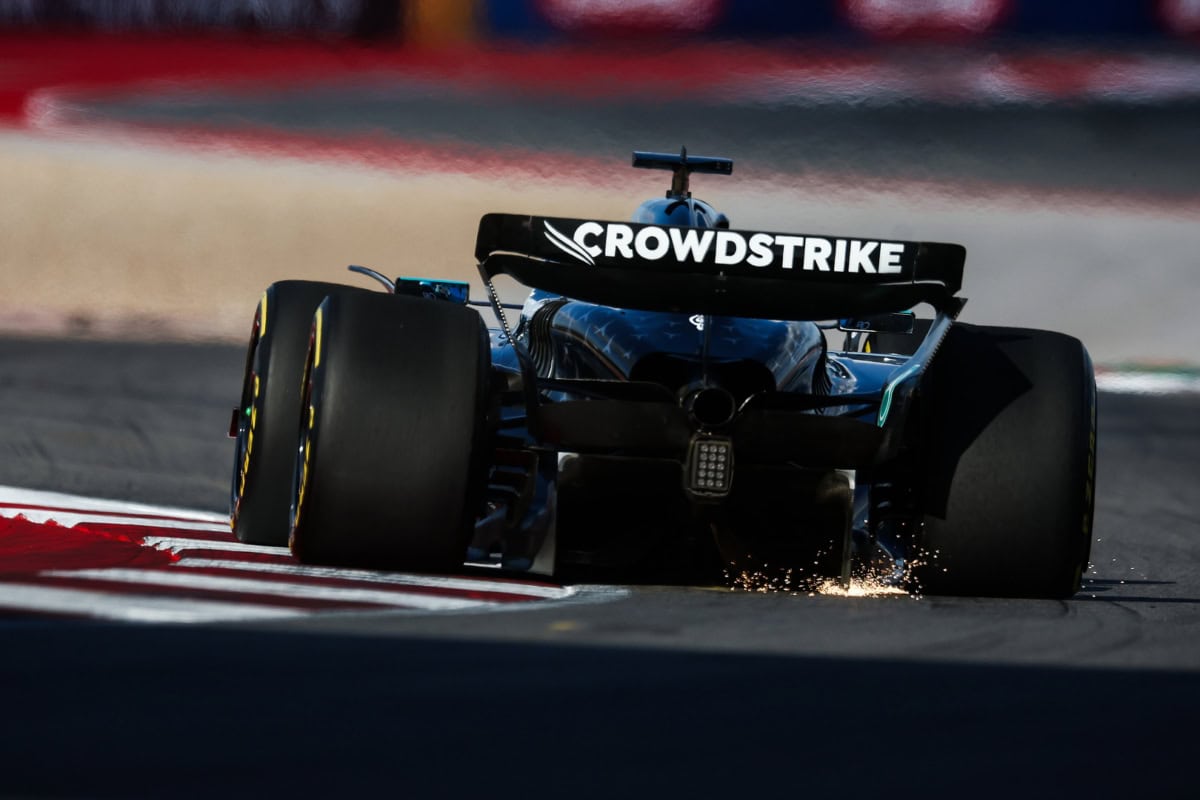
This partnership works because it moved beyond association into operational relevance. Formula 1 is one of the most data-intensive, time-critical environments in the world. CrowdStrike’s Falcon platform protects Mercedes’ globally distributed team, securing telemetry, cloud infrastructure and communications across race weekends.
The impact:
- CrowdStrike is positioned as a mission-critical partner operating under extreme pressure
- The environment reinforces CrowdStrike’s core proposition: speed, resilience and protection at scale
- Brand presence across car livery, race suits and digital channels delivers visibility, but credibility is earned through function
Crucially, the partnership also delivers high-value B2B outcomes. Formula 1 provides access to senior enterprise audiences in premium, immersive settings, where hospitality and shared experience support relationship-building with CIOs, CISOs and board-level decision-makers. Executive alignment, including direct involvement from CrowdStrike’s CEO, further reinforces trust, signalling long-term commitment rather than tactical spend.
Why it works: relevance, proof under pressure, and direct alignment with enterprise sales objectives.
- NordVPN × Football Clubs
NordVPN’s football strategy demonstrates how cybersecurity brands can use sponsorship to dominate digital touchpoints, not just physical assets. Rather than relying on perimeter branding alone, NordVPN integrates across club-owned platforms - websites, newsletters, matchday apps and social channels. They currently have deals with clubs including Leeds United, Aberdeen FC, New York City FC, and Charlton Athletic.
The impact:
- Repeated exposure in trusted fan environments builds familiarity and normalisation
- Cybersecurity becomes useful and personal rather than abstract
- The brand shows up at moments of high engagement, rather than interrupting attention
This approach turns football’s scale into a performance channel. Fans encounter NordVPN consistently where they already spend time, reinforcing relevance. Over time, this builds saliency and trust, both essential in a category where the product is invisible until it’s needed.
Why it works: frequency, contextual relevance and digital-first activation at scale.
The Takeaway for Cybersecurity Brands
These examples succeed for different reasons but share a common principle: sponsorship works hardest when it aligns platform, product and audience intent.
CrowdStrike proves the power of functional integration and enterprise credibility. NordVPN shows how scale and digital ecosystems can drive mass relevance and preference. Neither relies on visibility alone. Both use sponsorship to solve real commercial challenges, from trust-building and differentiation to engagement and long-term growth.
For most cybersecurity brands, the challenge is not a lack of opportunity, but a lack of discipline in how partnerships are assessed. Too often, decisions are reactive rather than strategic.
The TVX Perspective
The data makes one thing clear: scale alone is no longer the deciding factor in effective cybersecurity sponsorship. Football and Formula 1 continue to dominate current partnerships for good reason. Football delivers unrivalled reach and digital engagement at scale, while Formula 1 offers premium access, credibility and hospitality-led engagement with senior enterprise decision-makers.
Both can play powerful roles when aligned to clear commercial objectives.
But focusing only on headline platforms misses the wider opportunity. Underutilised categories such as tennis, participation-led sports and digital native communities reveal where reach, engagement and influence intersect. These environments offer repetition, relevance and credibility, allowing brands to move from visible to trusted.
The opportunity for cybersecurity brands is significant, but it is only unlocked through strategic choice. The brands that outperform will treat sponsorship as a growth lever that builds awareness, accelerates trust, opens doors and supports complex B2B sales cycles. In a crowded and risk-averse market, that discipline is what creates competitive advantage.
Looking Ahead: Where Cyber Sponsorship Goes Next
As cybersecurity cements itself as a board-level priority, sponsorship will increasingly be judged on reassurance, credibility and commercial contribution. We expect to see:
- Deeper integration with live and hybrid events that support thought leadership and relationship-building
- Purpose-led partnerships centred on digital safety, education and resilience
- Expansion into participation-led sports and tech-savvy communities with high engagement and lower saturation
- Sharper measurement frameworks linking sponsorship directly to engagement quality, access and pipeline impact
The brands that succeed will show up where trust is built, relevance is earned and decisions are made, not just where audiences are largest.
The TVX Role
At The Value Xchange, we help cybersecurity brands navigate this complexity with confidence. We work as a strategic partner defining clear success criteria, benchmarking opportunities through a rigorous commercial and brand lens, and shaping long-term partnership strategies that compound over time. The result is sponsorship that works harder: delivering visibility, trust and measurable growth.
If you’re ready to move beyond reactive deals and build partnerships that create real competitive advantage, let’s talk.