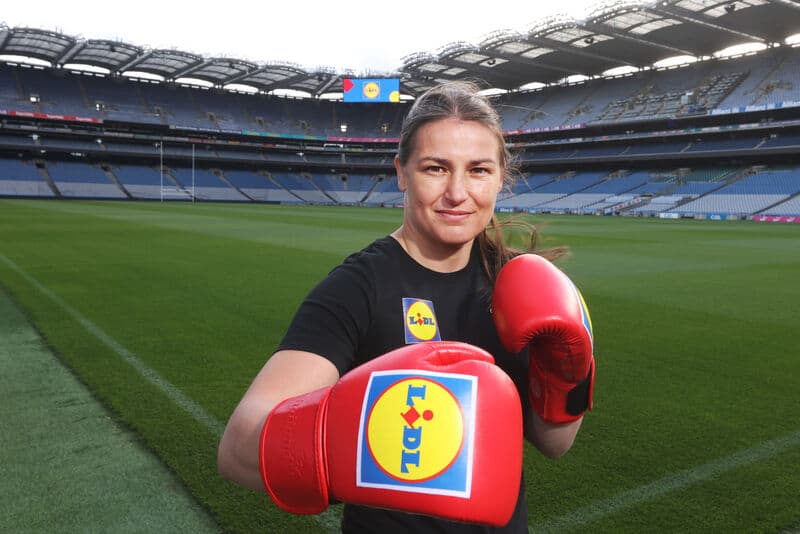
How AI brands can use sport and entertainment sponsorship to stand out in a market that has exploded over the past decade, turning hype into differentiation and proving, in real-world moments, why their technology matters.
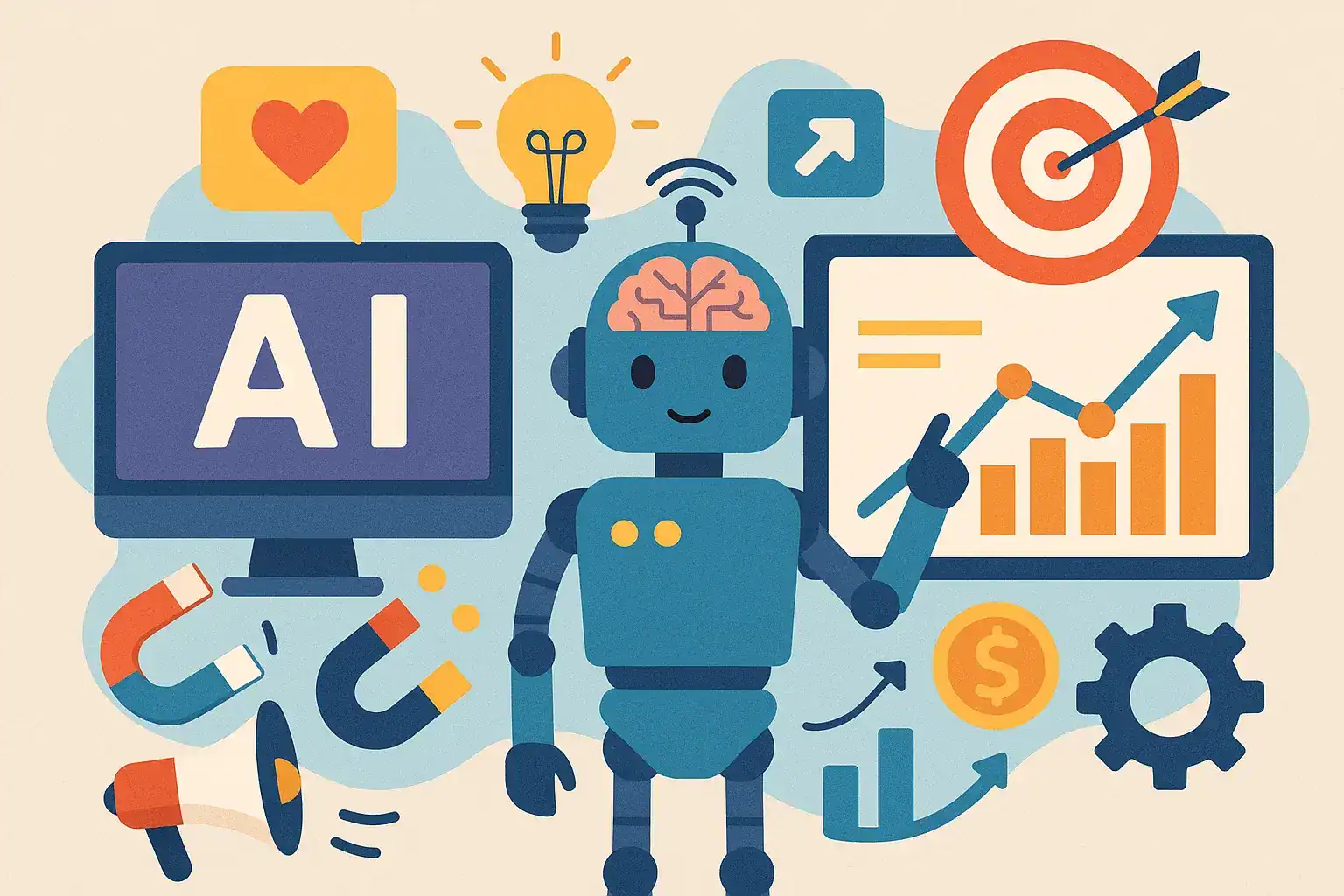
AI has everyone’s attention, but not everyone’s trust. Regulators are beginning to scrutinise the space more closely, while workforces are weighing up what it means for their roles. For most people, AI still sits somewhere between curiosity, uncertainty and the occasional use of ChatGPT to write an email. And in the three years since ChatGPT burst onto the scene, AI has rapidly embedded itself across multiple categories – from generative tools and copilots to computer vision, automation platforms and decision intelligence systems that now shape everything from communication to the cameras on our phones.
AI is often front-page news, but the people it’s supposed to serve still aren’t convinced. In the UK, adults are nearly twice as likely to see AI as a risk to the economy (39%) than an opportunity (20%), even as government strategy documents present it as a cornerstone of growth and public service reform. The Tony Blair Institute’s recent survey of UK adults found that 38% cite lack of trust in AI content as a barrier to adoption, slowing progress that shows up even among regular users. Zoom out and that scepticism sits awkwardly alongside the scale of what the industry has become. The global AI market was worth around £167 billion in 2024 and is projected to pass £896 billion by 2030, growing at roughly 30% a year.
However, there is widespread misunderstanding and disagreement with what people think AI is capable of, how it works and its broader ethical and societal risks. This is where we believe sport and entertainment sponsorship can play a role in developing public opinion of AI by making the invisible technology feel visible, human and useful in moments people already care about.
In other words, AI has already become one of the defining industries of this decade, but in markets like the UK most people still question whether it is safe, fair or even necessary. That disconnect between economic reality and lived perception is exactly where brands are, or will, get stuck.
Internally, marketing teams are also under pressure to translate complex AI capabilities into something commercially meaningful, often without clear precedent for how to do so.
Why AI Marketing Isn’t Closing the Gap
This might provide an explanation as to why most AI marketing still looks like classic enterprise SaaS. For all the talk of transformation on the B2B front, the go-to-market is familiar: performance funnels, “AI for X” messaging and a conference circuit largely speaking to those already bought in.
On the B2C side, it’s the same machinery with different wrapping; social ads, big Super Bowl commercials (as seen by Anthropic & Open AI), influencers, app‑store optimisation and referral loops selling AI as an upgrade to daily life. That drives trials and subscriptions, but it rarely explains what the tool is doing with your data, why it behaves the way it does, or how to use it safely and effectively. As a result, you currently get surface-level usage without clarity on when AI is genuinely useful, or why one product should be chosen over another.
At the same time, many AI businesses are under pressure to justify significant investment. High infrastructure costs, expensive talent and unclear monetisation models mean that for some, adoption is outpacing proven commercial return. In that context, differentiation is no longer just a marketing challenge, but a business-critical one.
All of this sits within a saturated landscape where there is now an AI tool for almost everything. Users are not just deciding if AI is useful, but which of the many similar products to trust and adopt. This is where brand becomes integral.
How Sponsorship Changes the Dynamic
In a category defined by complexity and similarity, functional messaging alone rarely creates distinction or emotional pull. Sport and entertainment offer something different, providing AI brands a way to move into experience - building familiarity, connection and ultimately brand preference in environments people already care about. Without that layer, the ecosystem risks becoming one that captures intent efficiently, but struggles to build lasting confidence or meaningful differentiation.
Most AI marketing today happens at a distance, trying to persuade people that AI will change everything without ever really showing how it changes something specific for them. Sponsorship can flip this dynamic by placing AI into environments where performance is visible and consequential. In sport and entertainment, AI is not judged on messaging, but on outcomes: decisions, experiences and moments that audiences can see and react to in real time.
Who’s Doing It Well?
That is what makes the Anthropic/Claude partnership with the Atlassian Williams F1 Team so compelling.
By positioning Claude as the team’s “Official Thinking Partner,” Anthropic integrates its technology directly into race strategy, car development and day-to-day decision-making, allowing its role to be observed in real time. Rather than relying on abstract claims, the partnership demonstrates how AI supports engineers and analysts in processing complex data under pressure. This feels native to Formula 1, a sport where performance is as much about decision quality as it is about speed. It also taps into Williams’ own narrative, evolving from a team once reliant on manual processes like excel sheets into one embracing advanced systems.
Crucially, this moves AI from a background tool to something with a defined role and narrative, helping audiences understand not just that AI is being used, but what it is actually doing.

The Data Behind the Decisions
At The Value Xchange, data guides every stage of our sponsorship lifecycle. One of our core tools is Luscid, an audience intelligence platform that aggregates data from sources including GWI and Meltwater. Using Luscid, we analysed how different groups engage with sport, culture, and live events. Looking at reach, participation rates, digital consumption, and broadcast viewing to understand where attention lives.
When we isolate AI target audiences in both a B2B and B2C context, some clear patterns emerge. On the enterprise side, decision‑makers and technical buyers are over‑indexed in premium live sport, major global events and high-attention cultural properties - the places where relationships are built and complex products are made tangible. On the consumer side, the AI‑curious skew younger and more urban, with heavy overlap between esports, football, combat sports and music festivals; they are constantly connected, but selective about where they give deep attention.
For B2B AI brands, the data points to environments where senior leaders are already in a decision‑making mindset, such as hospitality at major tournaments, conferences embedded into race weekends, and invite‑only sessions around marquee fixtures. For B2C products, it highlights properties where experimentation is normal and technology is part of the experience, not bolted on. In both cases, the opportunity is the same: to show up in the moments and spaces that these audiences already value and use sponsorship to turn abstract AI narratives into concrete, lived proof.
The implication is that AI brands don’t need more reach, but instead more relevance in the right environments. Sponsorship offers a way to do that with precision, not just scale.
Looking Ahead: Where AI Sponsorship Goes Next
AI sponsorship is still early enough that brands have a genuine opportunity to define what “good” looks like, but that window will not stay open for long. The brands that move now have the chance to shape category standards and stand out before the landscape becomes crowded and indistinguishable. The real opportunity is to use partnerships to prove real-world value, making it clear where the technology works, who it serves, and why it matters.
In our view, the untapped potential sits in three areas:
1. Owning very specific problems rather than vague narratives: AI that measurably improves officiating transparency, travel fairness, accessibility for disabled fans or staff safety will cut through long after generic “AI + speed” stories blur together.
2. Building live, explainable systems into the heart of events – from operations rooms to fan tools – and being radically open about how they work, what data they use and where the human is still in charge.
3. Using sponsorship as a bridge between B2B and B2C: the same partnership can host C‑suite executives in hospitality on Friday and fan education experiences in the fan zone on Saturday, turning one platform into a full‑funnel trust engine.
The risk is that AI follows crypto’s trajectory in sponsorship - a rush of indistinguishable deals, little real integration and a backlash when the bubble pops. That is why moving early, and deliberately, matters. Brands that take the time now to find properties that mirror their values, co‑design meaningful use cases with rights holders and set their own standards on transparency and safety will be the ones left standing if - or when - the hype cools.
The TVX Role
If you’re exploring how your brand can stand out through sport and entertainment, now’s the time to cut through the noise.
At The Value Xchange, our free Discover Lite audit gives a data-led view of where sponsorship can truly deliver impact - matching audience, market, and commercial opportunity.
Start with clarity, not guesswork. Get in touch.