
How sponsorship is helping destinations cut through, build relevance, and convert global attention into travel intent.

Tourism boards are operating in a far tougher marketing environment than they were even a few years ago. Since travel reopened following covid, many destinations have significantly increased their marketing investment, creating a more crowded and competitive landscape. No longer competing solely on a digital front, there is now tough competition between destinations, all trying to win the same travellers back.
At the same time, consumer behaviour has shifted. Audiences are more sceptical of polished destination advertising. People are quicker to scroll past content and more influenced by cultural relevance than pure inspiration. Paid media, search, social, influencer activity and large brand campaigns still matter, but they now tend to do specific jobs within the funnel rather than carrying the whole load on their own. They are harder to optimise, more expensive to scale, and less effective when asked to deliver awareness, consideration and conversion at the same time.
A common challenge we see is that many brands are concentrating the majority of their spend at the bottom of the funnel. Performance marketing is effective at converting demand that already exists, but it can only take you so far. It does little to build broader awareness or consideration, especially in crowded and competitive categories like tourism.
Against that backdrop, sponsorship has become a more meaningful part of the tourism marketing mix. Not as a replacement for traditional activity, but as a way to support the top and middle of the funnel by reaching people at scale, in context, and with a level of emotional connection that other channels now struggle to deliver. Sponsorship creates shared moments, sustained attention, and repeated exposure in environments people actively choose to engage with.
For many tourism boards, the move into sport reflects a broader reality. When traditional awareness-building is harder to sustain on its own, partnerships that build familiarity over time, rather than relying on short bursts of campaign activity, have become increasingly valuable.
How Sponsorship Can Solve a Tourism Problem
Tourism boards have not suddenly discovered sport. What has changed is the scale, structure, and seriousness of how they are investing.
Across UK football - the Premier League, Championship, and League One - there are currently 19 tourism boards involved in sponsorship, spanning 22 active deals. These range from digital-only partnerships through to principal and shirt-facing agreements, and they are spread across the country rather than concentrated around London clubs.
What stands out is the diversity of origin. Most of these tourism boards are international; eight are from the United States, two are UK destinations, and the remainder span the Middle East, Asia, Africa, and Europe. The focus tends to be long-haul demand, brand familiarity, and sustained presence in one of the most watched domestic sports markets in the world. In some cases, these partnerships extend beyond media exposure into operational integration, such as pre-season training camps or team visits. Wolves’ partnership with Visit Lauderdale, which included a pre-season camp in Greater Fort Lauderdale, is a clear example of how sponsorship can translate into real-world activation.
The assets being activated also tell a clear story. Using data from SponsorUnited, we can see that nearly 70% of deals include interior or TV-visible signage, making broadcast exposure the most commonly used asset. Almost half include premium placements, such as kit assets or press and interview backdrops. Alongside this, rights like official sponsor status, club social content, and digital advertising are increasingly part of the mix.
In short, tourism boards are not experimenting at the edges. They are investing in assets that deliver repeat exposure, broadcast visibility, and credibility through association. The Premier League, in particular, over-indexes for tourism board partnerships compared to other leagues. That’s partly down to its global reach, but also because its audiences are broad and mainstream, mirroring the wide net most destinations need to cast. When traditional destination advertising struggles to hold attention on its own, football offers a way to maintain presence in-market week after week.
The Data Behind the Decisions
At The Value Xchange, we use data to guide where sponsorship can genuinely add value. One of our core tools is Luscid, an audience intelligence platform that aggregates data from sources including GWI and Meltwater. Using Luscid, we analysed how tourism audiences engage across sport, culture, and live events, looking at reach, participation, digital consumption, and broadcast behaviour.
What consistently comes through is that sport delivers more than scale. It combines broad, mainstream reach with alignment to passion, identity, and community. For destinations, that matters. Travel consideration is rarely built through rational comparison alone; it’s formed slowly, emotionally, and often long before someone actively starts planning a trip. Sport allows tourism boards to sit in those moments of attention where familiarity and trust are built over time.
As expected, football leads on scale. It delivers unmatched reach, frequent exposure, and consistent broadcast presence across domestic and international markets. For tourism boards seeking familiarity in advance of travel planning, that repetition matters. Football allows destinations to sit in-market month after month, not just during campaign windows.
The upcoming ban on betting front-of-shirt sponsorship adds another layer. From the 2026/27 season, Premier League clubs will no longer be able to feature gambling brands on the front of shirts, creating a meaningful gap in one of the most visible assets in UK sport. For tourism boards with sufficient budget and ambition, this presents a rare chance to step into inventory that has historically been dominated by betting and financial services brands. With a significant number of clubs across the Premier League and EFL already featuring tourism boards as partners, often on front-of-shirt, sleeve, or principal partnership assets, this prominence is likely to increase further as the industry adjusts to the upcoming ban.
But football is not the only answer.
Luscid data shows that athletics, cycling and tennis perform particularly strongly among tourism audiences when engagement and participation are prioritised over pure reach. These sports align naturally with travel behaviours such as exploration, wellbeing and outdoor experience, while their international calendars provide consistent global exposure. Major events across athletics, tennis and cycling also deliver meaningful broadcast reach alongside strong cultural associations around lifestyle, sustainability and quality of life. Crucially, they tend to attract older, more affluent audiences and carry lower sponsorship saturation, giving tourism boards clearer cut-through and less competitive clutter than more crowded properties.
Beyond sport, arts and culture play an increasingly important role. Music festivals, cultural events, and heritage-led platforms score highly for emotional engagement and identity alignment. While they may not deliver the same broadcast scale, they can provide depth and credibility, especially for destinations positioning themselves around culture rather than mass tourism.
The data suggests a clear pattern. Football remains the anchor for reach, but the smartest tourism strategies are increasingly layered. They combine scale with relevance, and visibility with context.
Who’s Doing It Well?
- Visit Qatar x Goodwood Festival
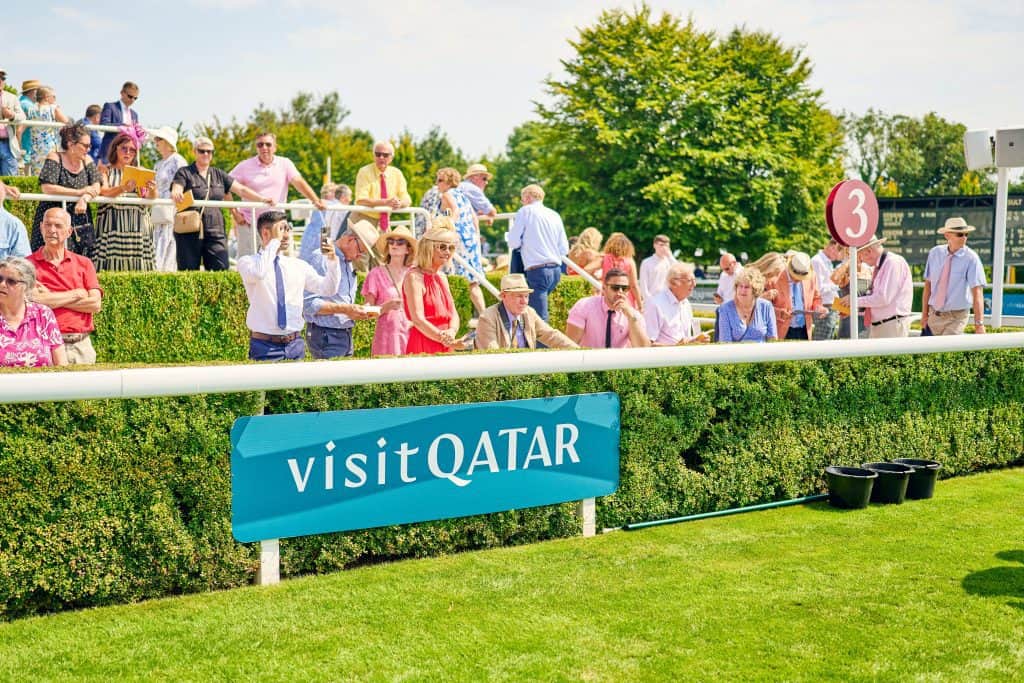
Visit Qatar became title sponsor of the Qatar Goodwood Festival, one of the most prestigious events in global horse racing. Known as “Glorious Goodwood”, the festival combines elite sport, tradition and high-end social culture, making it a natural fit for a destination focused on prestige and international sporting credibility.
Visit Qatar branding featured across key areas of the festival, including the Richmond and Lennox Enclosures. A dedicated hospitality pavilion showcased Qatari culture while hosting international tourism partners, racing stakeholders, embassy representatives and UK decision-makers.
The impact:
Goodwood delivers both scale and quality. The festival attracts a large on-site audience alongside strong broadcast and media exposure. For Visit Qatar, this created sustained visibility in a premium environment, supported by direct engagement with influential audiences who shape travel and sporting perceptions.
Hospitality and cultural storytelling allowed Visit Qatar to move from awareness into perception-building, positioning the destination as a host of world-class events rather than simply a place to visit.
Why it works: The partnership works because of alignment. Horse racing reflects Qatar’s long-term investment in global sport and heritage, while Goodwood provides a credible platform to reinforce that ambition. Rather than chasing volume, Visit Qatar embedded itself in a setting that shapes how the destination is understood.
- Experience Kissimmee x England Netball & Netball Super League
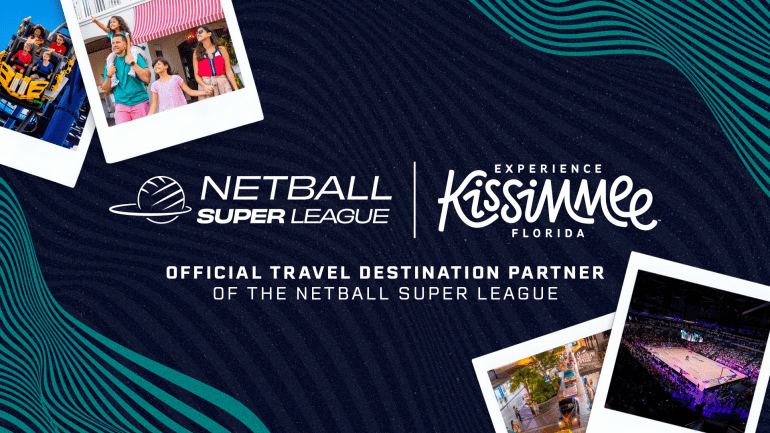
Experience Kissimmee partnered with England Netball, the Netball Super League (NSL), and the Vitality Roses to support its growth in the UK, its largest international source market. The partnership was shaped by a clear insight: women are the primary decision-makers when it comes to family holiday planning.
Netball offered a highly relevant platform. As one of the UK’s leading female sports, it delivers strong participation, loyal communities, and year-round engagement across elite and grassroots levels. Experience Kissimmee was integrated across England Netball and NSL channels, with branding, content, and fan-facing activations designed to build familiarity and affinity with a female-led audience.
The impact:
The partnership provided repeated exposure to a highly targeted demographic. Through competitions, member engagement, and storytelling, Experience Kissimmee embedded itself into the sport’s ecosystem, associating the destination with community, family, and shared experiences.
By aligning with a sport that reflects real decision-making dynamics, the partnership supported long-term consideration rather than short-term awareness.
Why it works: This partnership is rooted in a clear understanding of who makes travel decisions and where they can be reached most effectively. Netball provides consistent access to women who influence holiday choices, within a trusted, participation-led environment. For Experience Kissimmee, sport functioned as a targeted channel rather than a mass awareness tool, enabling sustained presence at the moments when destination consideration is formed.
The TVX Perspective
From our perspective, the most effective tourism sponsorships are those where the destination understands what role sport or the arts is meant to play within the wider marketing mix.
Partnerships work best when they're treated as a long-term brand platform, not a campaign add-on. It creates space for destinations to build familiarity, credibility, and cultural relevance over time, especially in markets where traditional advertising struggles to maintain impact.
Importantly, this isn’t about replacing other channels. Tourism boards still need digital, PR, and content-led strategies. Sponsorship simply offers something those channels increasingly can’t deliver on their own: shared attention, emotional context, and scale.
Looking Ahead: Where Tourism Sponsorship Goes Next
Looking forward, tourism sponsorship is likely to become more selective and more strategic. As competition for attention continues to intensify, destinations will favour fewer, better-aligned partnerships that offer longevity and cultural fit.
Football will remain central, particularly as the sponsorship landscape reshapes post-betting ban. But growth will also come through cultural platforms, major events, and properties that allow destinations to tell richer stories.
For tourism boards, the question is no longer whether sponsorship has a role to play. It’s how clearly that role is defined, and how well it’s integrated into a broader strategy that supports long-term demand rather than short-term awareness.
The TVX Role
If sponsorship is on your radar, now is a good time to be deliberate about it.
At TVX, our free Discover Lite audit offers an introductory assessment of how sponsorship could support your growth, based on audience fit, market context, and commercial value.
Get in touch if you’d like a clear starting point.